-
Monday - Friday, 8:00am- 5:00 pm
- +86-19866698773
- lvsong@lvsongtrade.com
Monday - Friday, 8:00am- 5:00 pm
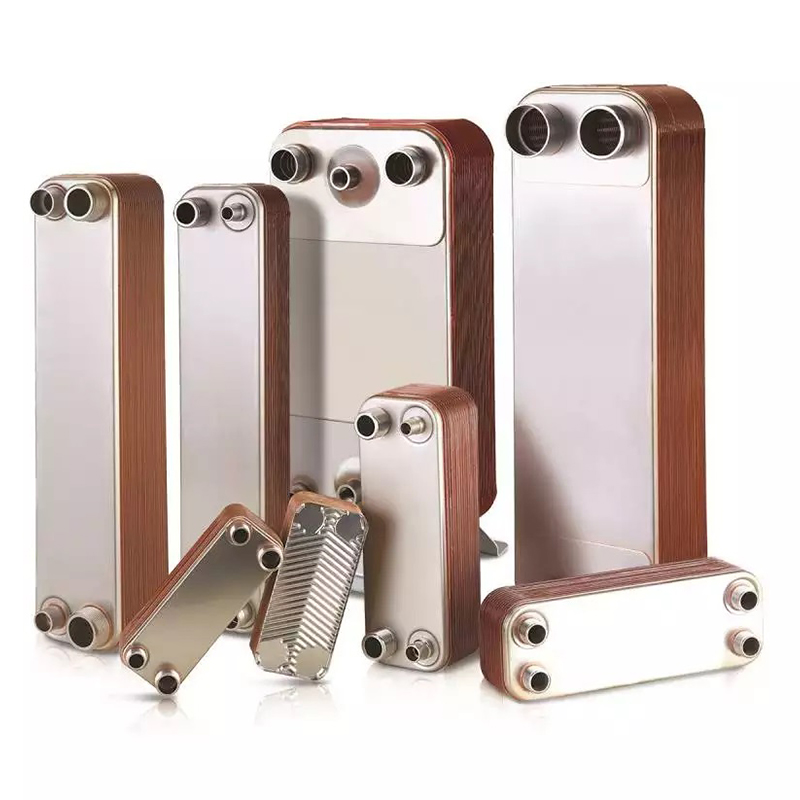
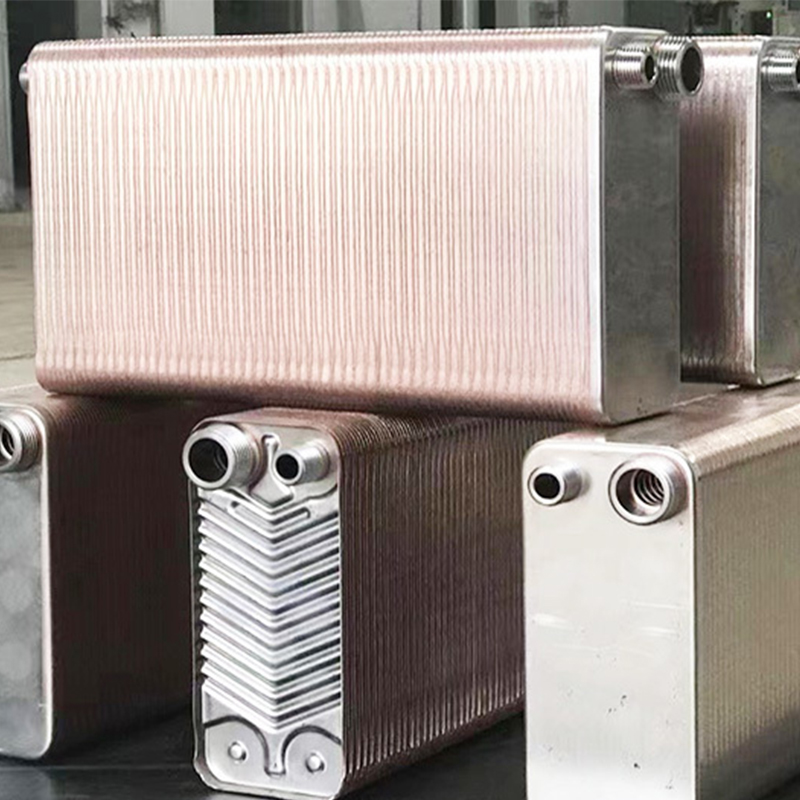
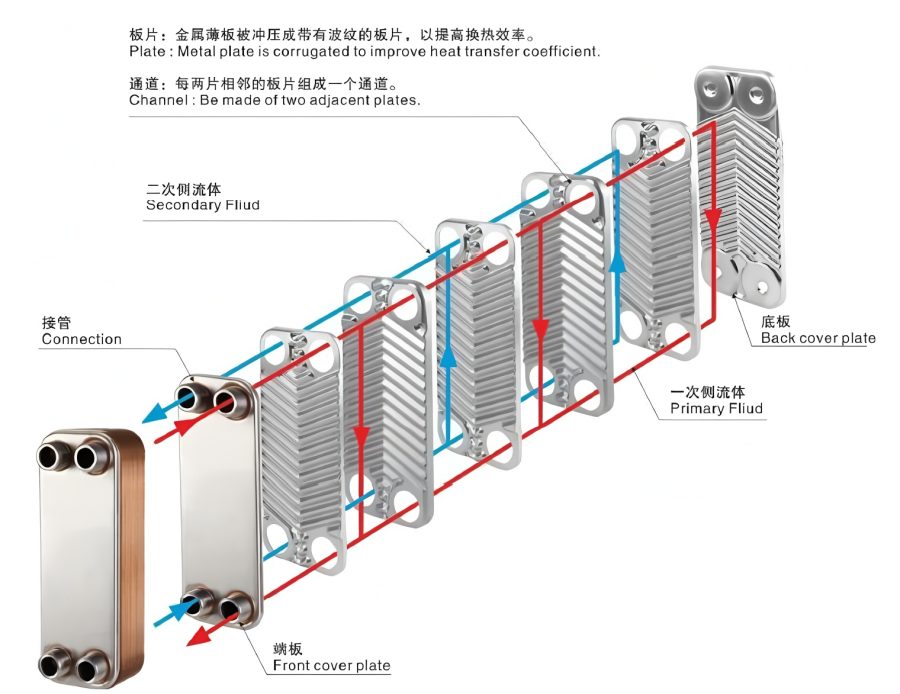
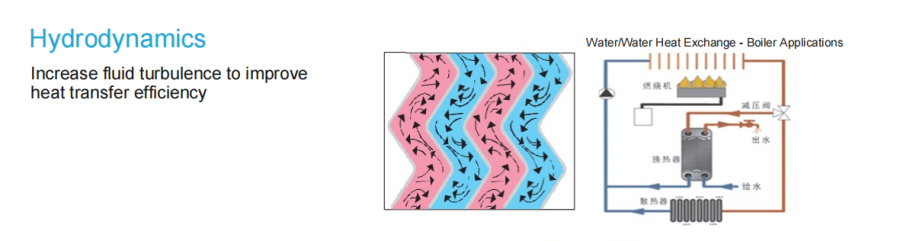
Brazed plate heat exchanger is a new type of high-efficiency heat exchanger made by stacking a series of metal sheets with certain ripple shapes and brazing processing. Thin rectangular channels are formed between various plates for heat exchange. Compared with conventional shell and tube heat exchangers, its heat transfer coefficient is much higher under the same flow resistance and pump power consumption, and there is a trend to replace shell and tube heat exchangers within the applicable range.
The brazed plate heat exchanger is vacuum brazed from multiple sets of stainless steel corrugated plates, using copper as the welding material. The welding material can both concentrate the plates to the contacts and seal the combination. Although copper brazed heat exchangers are ideal for many applications, they are not suitable for the food processing industry or applications involving corrosive fluids
Product Introduction
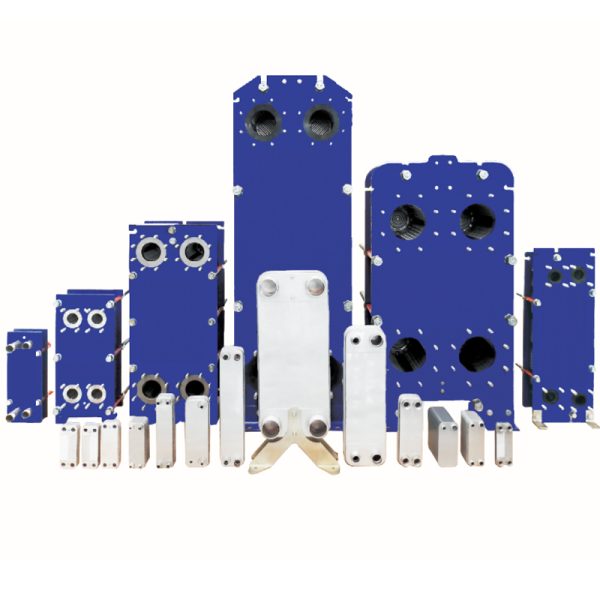
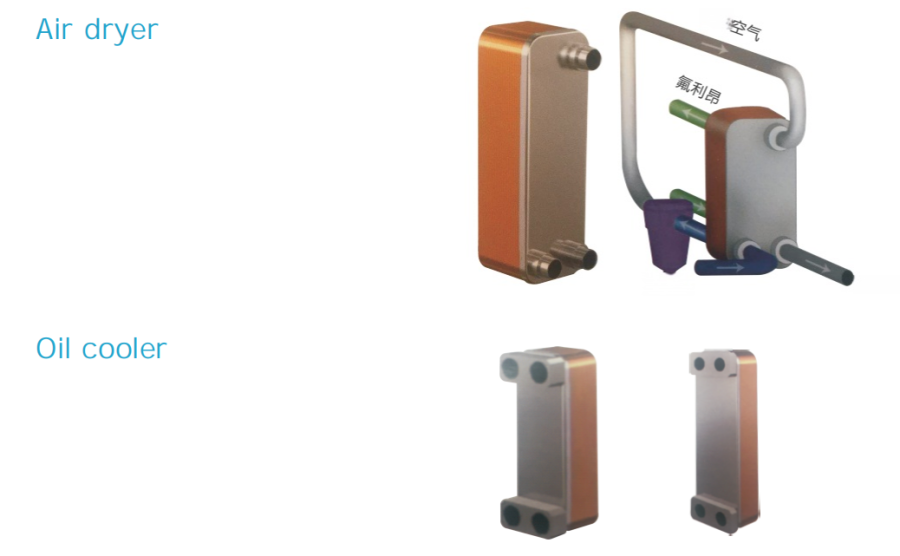
Brazed plate heat exchanger is an industrial heat exchange equipment widely used in metallurgy, power, chemical, pharmaceutical, HVAC and new energy fields, mainly for heat exchange between liquids or gases. The products are manufactured using vacuum brazing technology, and compact heat exchange structures are formed by stacking corrugated metal plates.
This device has technical advantages such as high heat transfer efficiency (up to 3-5 times that of tubular), high pressure resistance (up to 45BAR), and wide temperature range (-160 ℃ to+225 ℃). It adopts 316L stainless steel material and dual fluid reverse flow design to improve heat transfer performance. Strict water quality management is required for daily operation, preventing scaling through processes such as acid washing and passivation, and regularly cleaning the filtration device to maintain efficiency. During installation, it needs to be fixed vertically, and the direction of the connecting pipe should comply with the flow characteristics of the refrigerant. The equipment weight is only 20-30% of that of traditional shell and tube heat exchangers, making it suitable for space limited scenarios
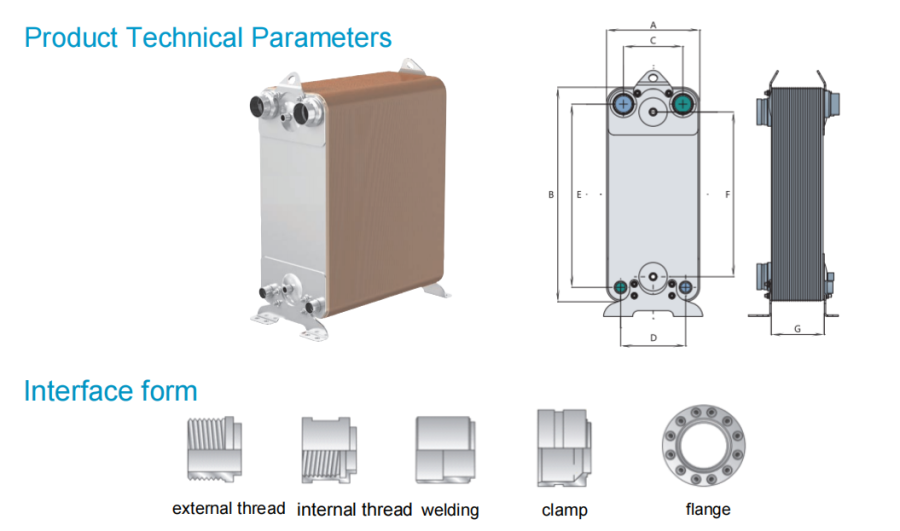
Structure of brazing type plate heat exchanger
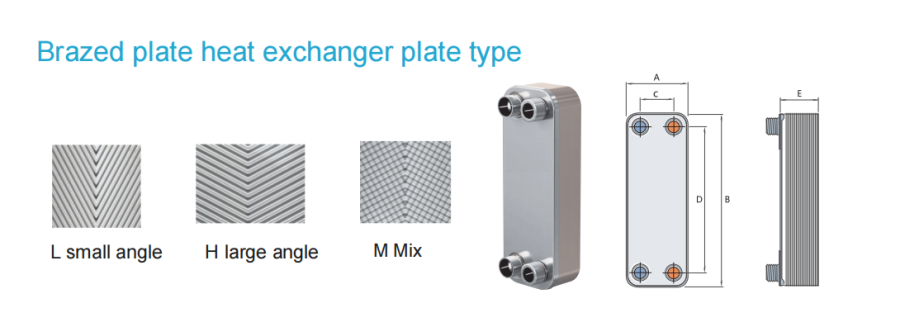
Technical Specifications
| Model | DB14 | DB24 | DB29 | DB61 | DB112 | DB200 |
| A(mm) | 77 | 77 | 111 | 111 | 191 | 324 |
| B(mm) | 206 | 312 | 310 | 525 | 616 | 742 |
| C(mm) | 42 | 42 | 50 | 50 | 92 | 205 |
| D(mm) | 172 | 182 | 250 | 466 | 519 | 624 |
| E(mm) | 8.8+(2.3*n) | 9+(2.25*n) | 10+(2.35*n) | 10+(2.35*n) | 16+(2.07*n) | 11+(2.7*n) |
| Weight(Kg) | 0.6+0.06*n | 0.9+0.09*n | 1.2+0.12*n | 2.5+0.19*n | 5.7+0.41*n | 12+0.6*n |
| Stagnation volume(L) | 0.027*(N-2) | 0.054*(N-2) | 0.054*(N-2) | 0.094*(N-2) | 0.18*(N-2) | 0.51*(N-3) |
| Design pressure (Mpa) | 3/4.5 | 3/4.5 | 3/4.5 | 3/4.5 | 3/4.5 | 2.1 |
| Test pressure (Mpa) | 4.5/6.8 | 4.5/6.8 | 4.5/6.8 | 4.5/6.8 | 4.5/6.8 | 3.2 |
| Maximum flow (m3/h) | 4.1 | 4.1 | 14 | 12 | 51 | 128 |
| Plate material | 304/316 | 304/316 | 304/316 | 304/316 | 304/316 | 304/316 |
| Single board heat exchange(m2) | 0.014 | 0.024 | 0.029 | 0.061 | 0.112 | 0.2 |
| Maximum number of plates | 60 | 60 | 150 | 160 | 300 | 300 |
 Eng
Eng  简体中文
简体中文  العربيّة